Are pesticides a health hazard for farmers?
Evaluating potential hazards for the Agricultural Health Study (AHS)
Challenge
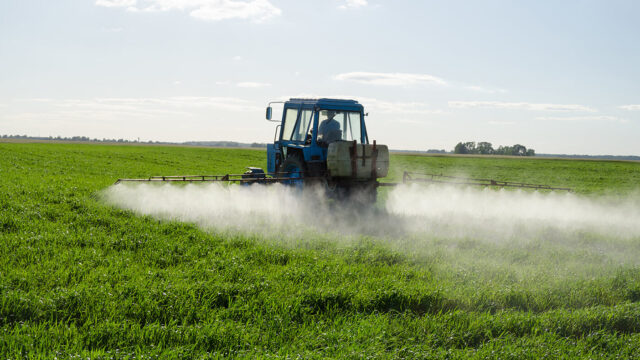
Despite a lower overall mortality rate than the general population, farmers experience an excess of certain cancers, such as leukemia, myeloma, non-Hodgkin’s lymphoma, and cancers of the lip, stomach, skin, brain, and prostate. Other conditions, like asthma, neurological diseases, and adverse reproductive outcomes may also be related to agricultural exposures.
The National Cancer Institute, the National Institute of Environmental Health Sciences, and the Environmental Protection Agency launched the Agricultural Health Study (AHS) in 1993 to evaluate a connection between these health outcomes and potentially hazardous substances prevalent in farming communities.
Solution
Since 2002, Westat has followed nearly 90,000 registered pesticide applicators in Iowa and North Carolina and their spouses to determine how environmental exposures from pesticide application may put them at increased risk for cancer. The study will also investigate the role of lifestyle, diet, and genetic factors as contributors to cancer risk.
As the coordinating center, we develop the annual study update, maintain the master database of study participants and participation in substudies, trace participants, identify and verify disease outcomes, and build analytic datasets. Previously we collected biospecimens, dust, and GPS measurements for a biomarker substudy within the AHS that was completed in 2018. Since the completion of that substudy, we have been building analytic datasets and tracking specimens and requests for specimens.
Results
This research will identify factors that affect the risk of various types of cancers and other adverse health conditions in farming populations.
The list of publications for the AHS is available at https://aghealth.nih.gov/news/publications.html.


-
Perspective
Reimagining Care Delivery for Rural CommunitiesAugust 2026
Rural communities often face persistent barriers to healthcare access, including provider shortages, long travel distances, limited behavioral health services, and challenges coordinating care across providers…
-
Perspective
Westat @ JSM 2026: Improving Lives by Advancing SocietyJuly 2026
Westat staff will be attending and presenting at the 2026 Joint Statistical Meetings (JSM 2026) in Boston, Massachusetts, August 1–6. The meetings, which are hosted…
-
Perspective
Healthcare Transparency Empowers Patients and Strengthens TrustJune 2026
Healthcare transparency supports informed decision-making, strengthens patient trust, and empowers patients to play a more active role in their own care. Health agencies and organizations,…